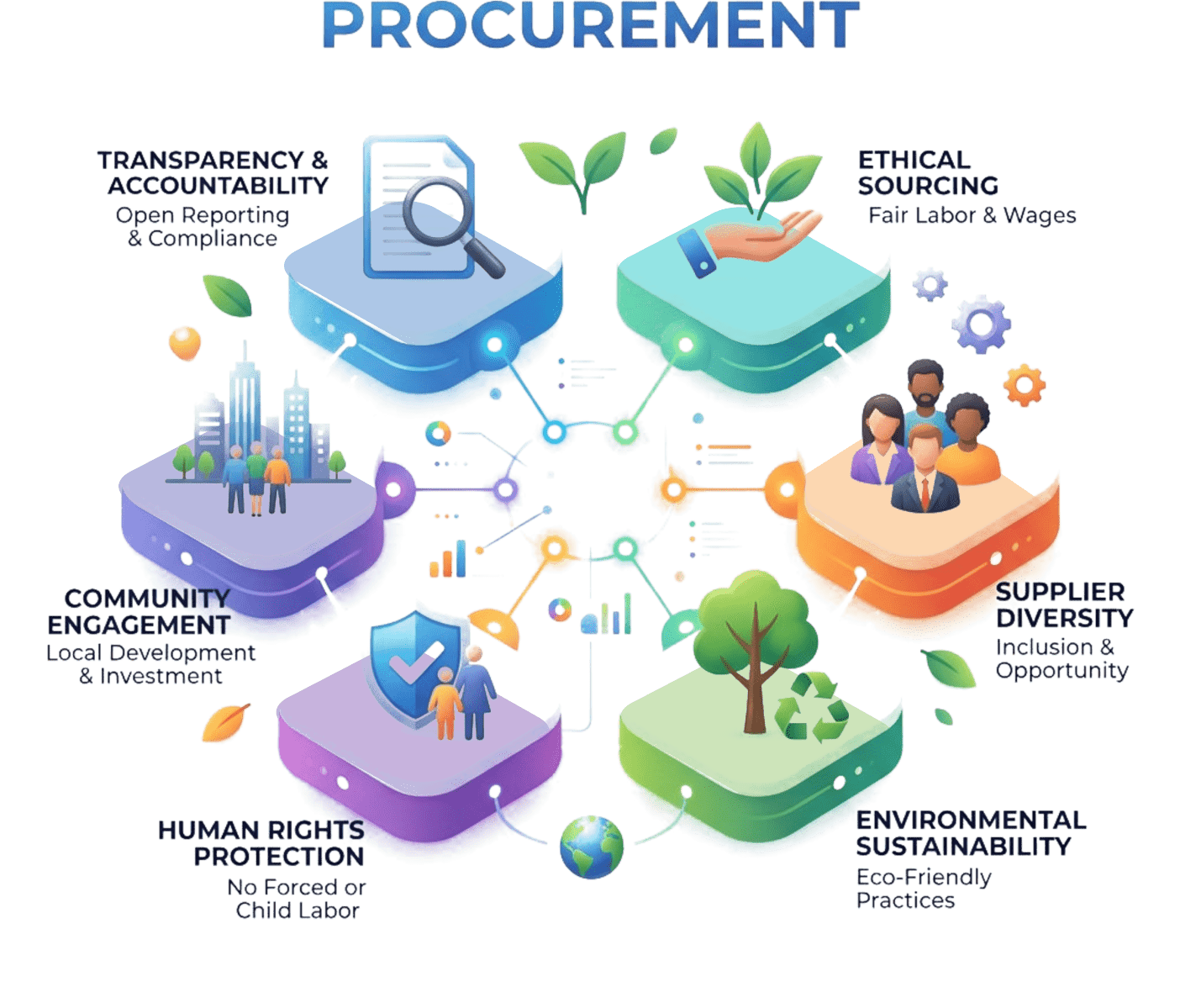
What Is Procurement?
Procurement is defined as the buying of goods and services that enable an organisation to operate its supply chains, in a profitable and ethical manner. There are many different interpretations of what procurement is, and this definition can vary from sector to sector, subject to the activities undertaken within your organisation. Here are some definitions:

Procurement team:
The procurement team are responsible for overseeing the steps of the procurement cycle, covering core department activities such as market analysis, sourcing, negotiation, contracting and supplier relationship management. Procurement adds value and reduces risk across the supply chain by establishing the right working relationships with suppliers.
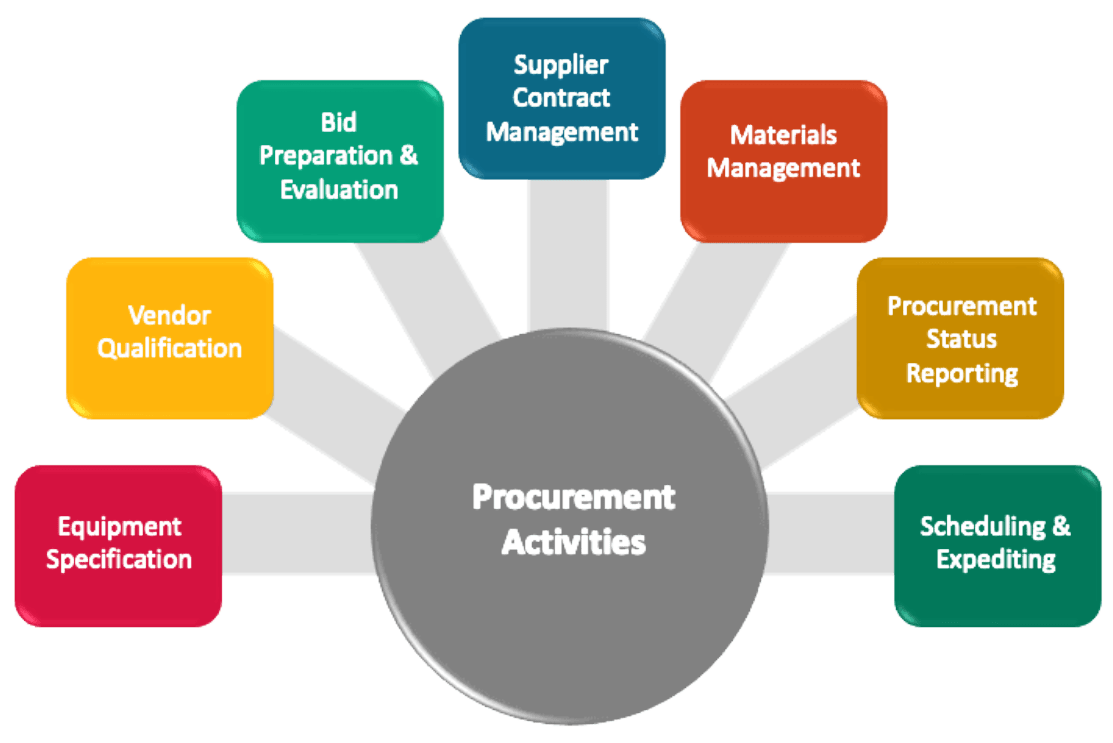
Procurement activity:
The activity overseeing the steps of the procurement cycle, such as market analysis, sourcing, negotiation, contracting and supplier relationship management for goods, works and services, covering both acquisitions from third parties and in-house providers. The process spans the whole procurement cycle from the identification of needs, through to the end of a services contract or the end of the useful life of an asset. It involves options appraisal and the critical “make or buy” decision.
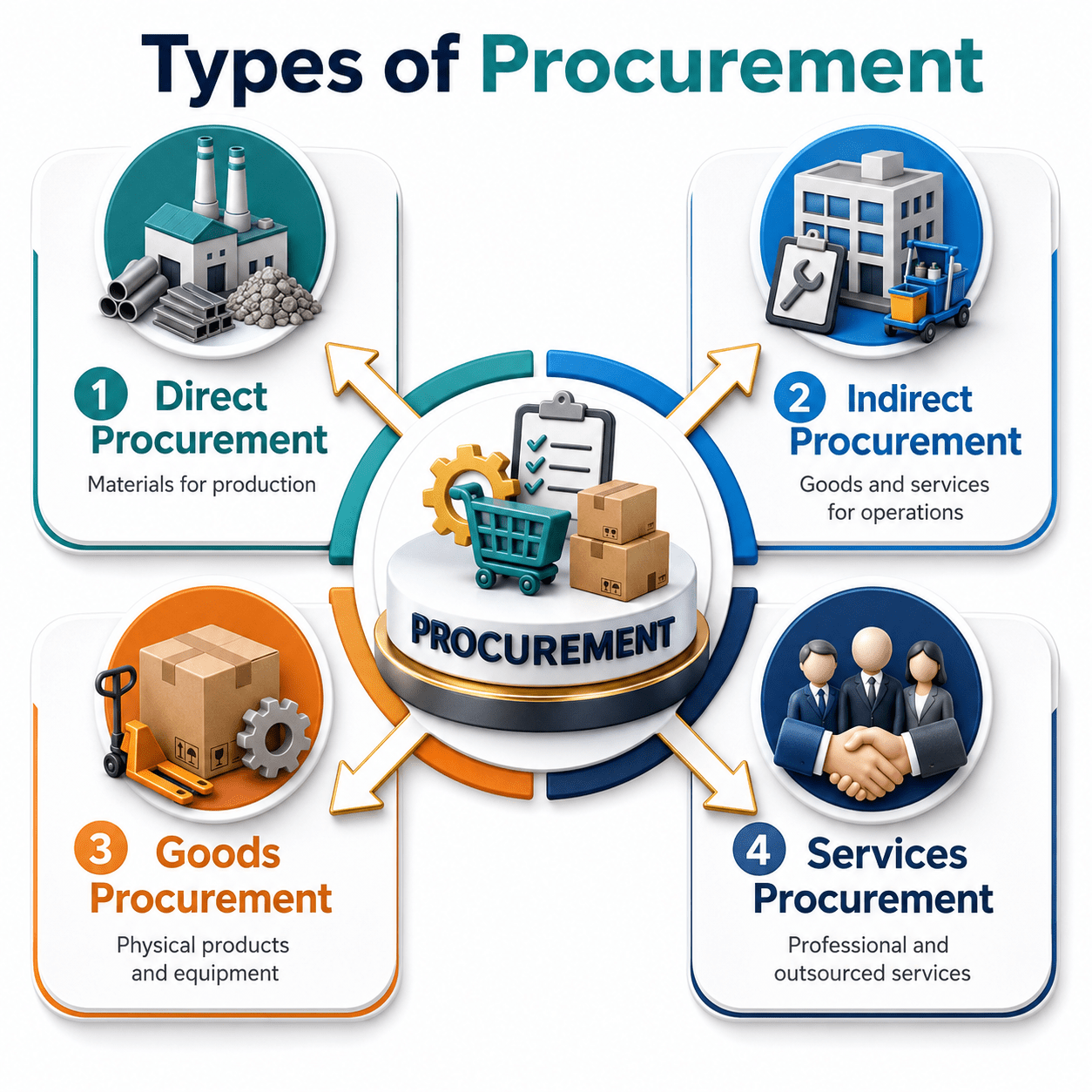
Types of procurement
There are many different types of procurement, but they can be classified as direct or indirect procurement. Direct procurement involves procuring the raw materials and goods that are needed for production. They’re often ordered in large quantities and come from many different suppliers at the best possible cost, quality and reliability. They can be raw materials, mechanical parts or packaging to name a few. Indirect procurement involved procuring of services that are not used in the manufacturing element but are still fundamental for the day-to-day operations. Indirect procurement consists of utilities, maintenance of machinery, travel expenses, computers and marketing expenses. There are also two more types of procurement. Goods procurement refers to physical items and can include direct and indirect procurement and services procurement which focuses on procuring people-based services.
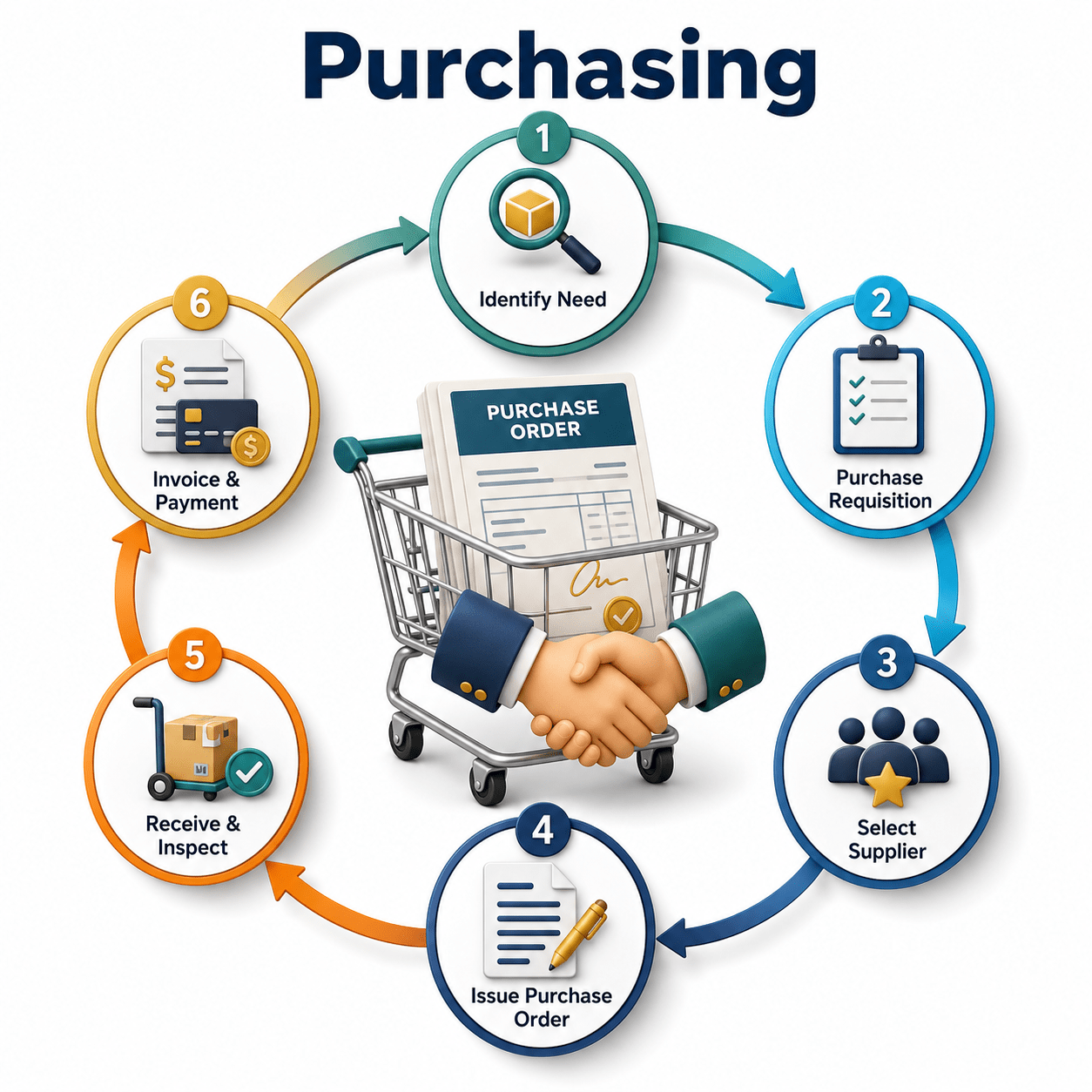
Is procurement different to purchasing?
Procurement differs to purchasing in a number of ways. The main difference is that procurement is a long-term approach to acquiring goods and services, and purchasing is the short-term direct purchasing of products and servings. Procurement involves sourcing suppliers, negotiating, contract management and supplier development to name a few, and purchasing is fulfilling the transaction only and is very much a reactive and transactional approach.
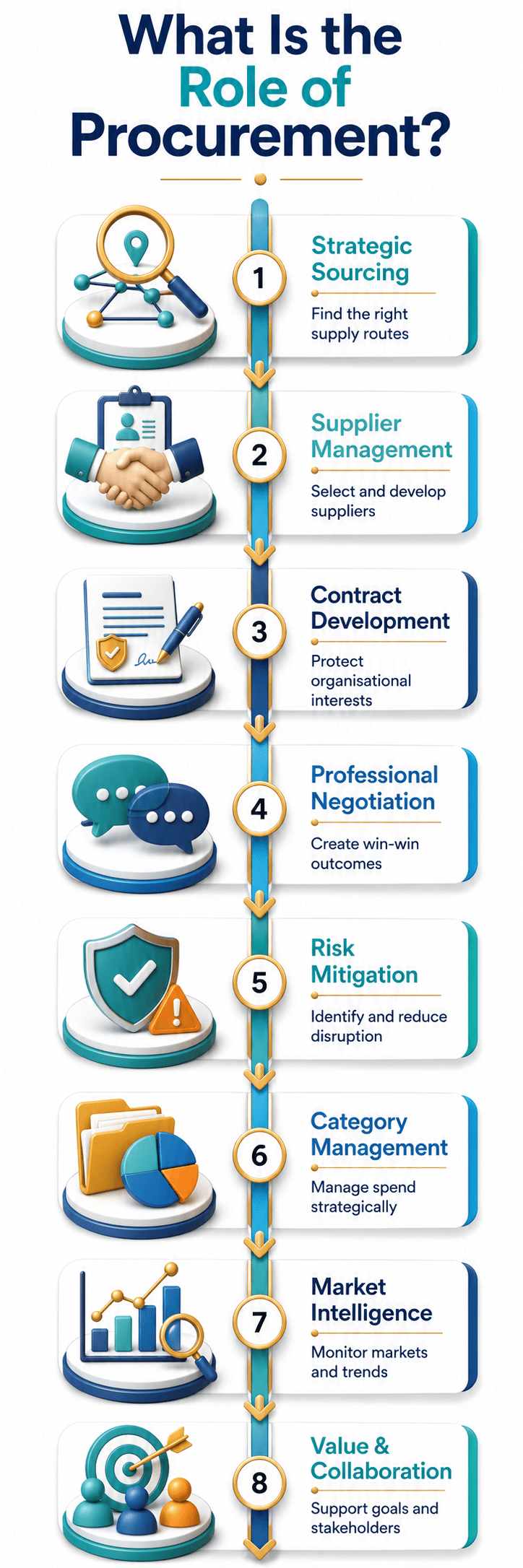
What is the role of procurement?
A common misconception of the role of procurement is that their role is to obtain goods and services in response to an organisation's needs. However, procurement isn’t just limited to this. Procurement’s role is to procure products or services at the right place, for the right price, to the right quality and quantity and delivered at the right time. Take a more in-depth look below at the role of procurement professionals. Manages the whole procurement process and supply base. This includes identifying opportunities that may add value such as the selection of suppliers, managing any internal operations like the maintenance of policies and to achieve organisations objectives through effective communication Developing strong relationships with the rest of the organisation. This could be helping marketing with insight into new ideas, monitoring supplier’s performance and insight into capacity and evolving product and process technology. Procurement supports organisations goals through developing effective strategies. This could be by monitoring supply markets and trends, identifying critical materials and supporting the organisation to become a competitive supply base. Strategic sourcing – Market analysis and scoping to identify critical supply routes that support the organisational and procurement strategy. Risk Mitigation – Prequalification and ongoing analysis of suppliers and activities within the supply chain to mitigate risks from Macro factors that could disrupt your own organisations activities and outputs. See STEEPLED analysis for more information. Supplier relationship management – Ongoing analysis and feedback to suppliers to enhance the working relationship for the benefit of both parties Contract development - Establishing legal contracts between the buying and selling organisations that protects the organisations interests. Category management – the management of spend for dedicated areas and commodity knowledge required to protect the organisation Negotiation - The ability to negotiate with suppliers to establish win: win outcomes for both parties whilst also meeting the needs for your organisation
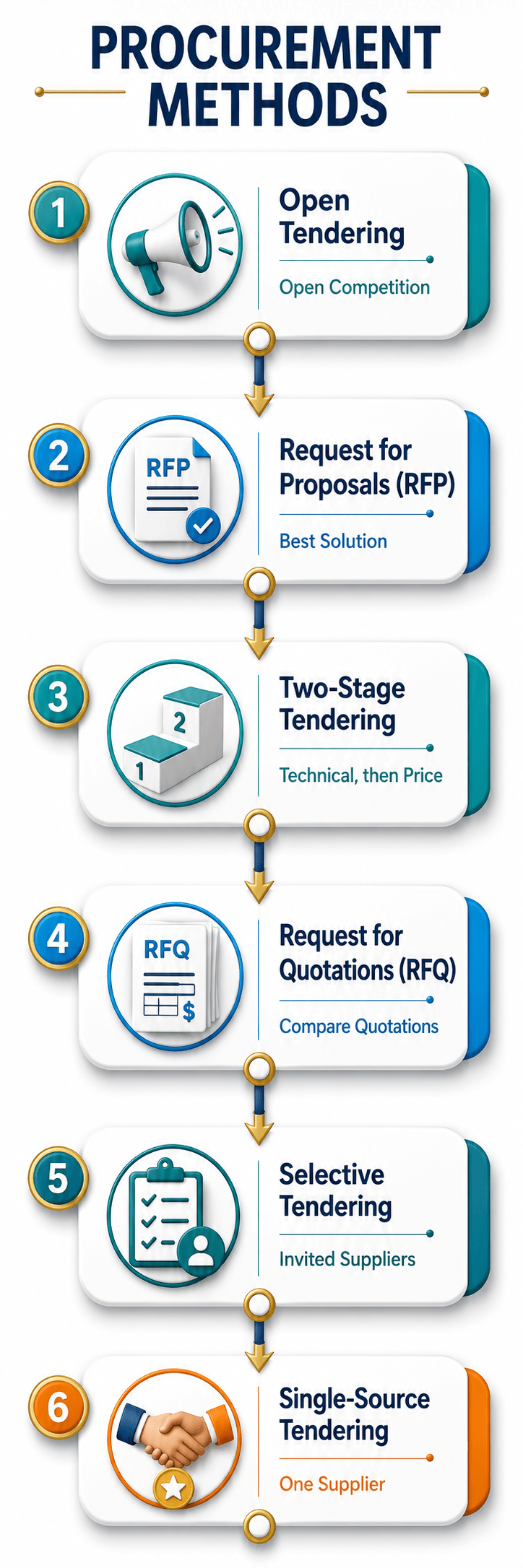
What are the types of procurement methods?
There are lots of different types of procurement methods you can use to ensure a smooth procurement operation. Open tendering This method ensures all interested suppliers have an equal opportunity to bid for the contract in question. It promotes competition and fairness, but can be time-consuming and labour intensive as you’ll need to evaluate the bids as they come in. Request for proposals This method is an open request, whereby the organisation asks suppliers to bid for the contract. The organisation would need to describe what they need to fulfil and the expected timeline of the completion of the work. Two stage tendering This method is split into two stages. The first stage has complete information without prices from the suppliers, and the second stage includes the price specification from the suppliers. The supplier with the highest ranked bid is then invited to stage two, where they’ll submit financial proposal. Request for quotations This procurement method is non-competitive, as you’ll choose the suppliers to request quotation from. You’ll typically pick at least three suppliers to submit quotes, and pick the best one based on the requirements you’re after. Selective tendering With this procurement method, suppliers can only submit tenders by invitation. The competition is confined to a number of suppliers who are pre-betted based on their track record. Single source tendering This method is typically used under exceptional circumstances. For example, if only one supplier is qualified, goods or services only available from a specific source or in emergencies.